Lab Director

The CPCM Lab brings together psychologists, computer scientists, linguists, and methodologists. We collect data in psychological experiments and apply techniques from natural language processing, machine learning, and statistical modelling to better understand human behaviour and the models that increasingly imitate it.
How can computational methods enhance our understanding of the human mind and behaviour?
How can psychological research methods inform our understanding of computational model behaviour?
Our work is cross-disciplinary. We treat language as data, models as participants, and experiments as the connective tissue between the two.
Application deadline: 22 March 2026.
The 2-year master track AI for Psychological Research is now open. If you're interested in applying or have questions, please reach out.
Our special issue on the Impact of Artificial Intelligence and New Technologies on Legal and Criminological Psychology is open for submissions. For questions, contact Bennett or Riccardo Loconte.


Assessing the artificial mind through the marriage of natural language processing and psychometrics
My project is focused on understanding generative language models through psychological measurement frameworks. My work focuses on if – and how – psychometric approaches can be used to validly assess the behaviour of these models.

Computational methods to measure, understand, and influence prosocial behavior and trust
In our project, we apply and develop methods and tools to measure and model the dynamics of trust and prosocial behaviors - individually and at scale. Also, we explore how LLMs, apps, and other technologies, as well as humans, can actively influence these behaviors in potentially harmful or potentially constructive directions.

Text-mining methods for theory development in psychological and social science research
My PhD project develops text mining methods to automatically detect and parse causal claims in social science texts. It turns unstructured prose into structured who-causes-what representations and encodes them as Directed Acyclic Graphs (DAGs). This lets researchers identify recurring causal patterns, generate testable hypotheses, and conduct transparent evidence synthesis and theory refinement.

Adolescent-Specific Assessment and Psychotherapy (ASAP): Innovating Idiographic Methods for Youth-Tailored Care

Spin: Questionable Research Practices in Scientific Reporting
Investigating the concept of spin (primarily found in biomedicine) and relating it to the concept of questionable research practices (primarily found in psychology). Investigating the prevalence and impact of spin in psychological research.
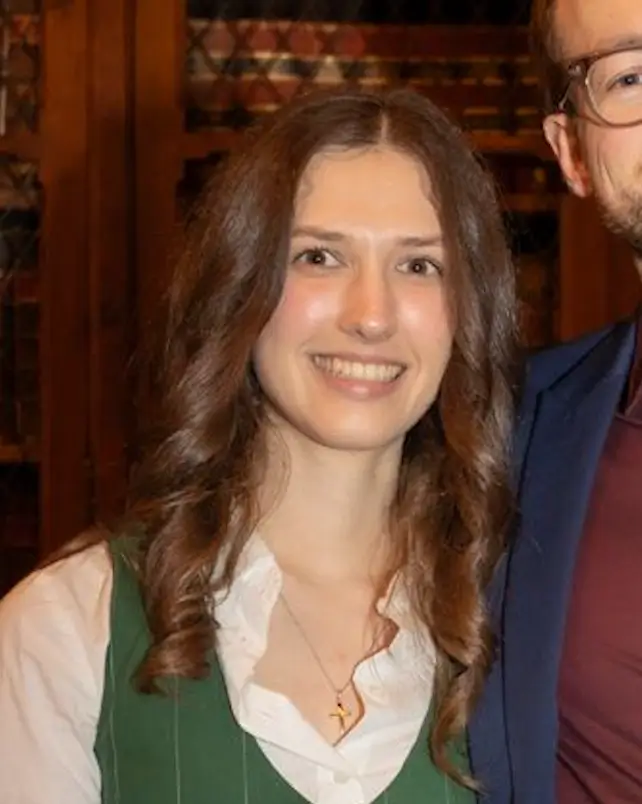
Understanding decision-making in transport behaviour through social media data

Human adversarial machine learning on text data for psychological inference
This project investigates how research designs from adversarial machine learning - when applied to NLP tasks, and when extended to human adversaries and human targets - can inform psychological theory for “wicked” problems such as deception.
Decoding distorted interpretations of ambiguity from text data
Everyday life is full of ambiguous social situations, and biased / inflexible interpretations of these situations are linked to depression and anxiety. Our work focuses on leveraging linguistic indicators of interpretation processes to improve understanding, measurement, and intervention methods that are more ecologically valid and translatable to real-world mental health.
Ad-Hoc Machine Learning Explainability through Psychometrics
I aim to improve the quality of explanations generated by machine learning models through an interpretability by design approach. I am designing and testing a scale to measure understandability at feature level in order to favour understandable features during machine learning model training and hence create better explanations ad-hoc.


Simulated vs. genuine empathy
This project tries to disentangle human perceptions of LLM generated empathetic text from the ‘objective’ convincingness. This study builds on and tries to extend the investigation of stochastic empathy.

Simulated vs. genuine empathy
This project tries to disentangle human perceptions of LLM generated empathetic text from the ‘objective’ convincingness. This study builds on and tries to extend the investigation of stochastic empathy.
We investigate how computational methods can enhance our understanding of the human mind - and how psychological research can inform our understanding of computational models.
Integrating experimental data and computational methods to address the "hard problems" of deception research.
Developing the methods needed to advance computational psychology research.
Treating models as objects of study in their own right.
Using computational text analysis to study and predict psychological constructs in humans - including cynicism, emotion, and deception.
Lab members are typically postdocs, PhD students, thesis students, or research interns. These are the most common pathways into the lab, aligned with career stage and project needs.
Advertised inside the programmes we are involved in. Watch for openings if you're enrolled.
Several routes - funded university posts, joint PhDs with another institution, or self-funded. Funded positions are publicly advertised.
Identify a topic that aligns with the lab and overlaps with at least one current member, then email Bennett. Internships should run at least six months.
Computational Psychology and Computational Methods Lab For potential collaborations, internships, visits, or programme questions - Email Bennett directly. We try to read everything; response times may vary depending on current academic commitments.
bennett.kleinberg@tilburguniversity.edu
Dr. Bennett Kleinberg
Department of Methodology & Statistics
Tilburg University
The Netherlands